


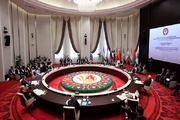
Heads of state representing the Arab League and the Organization of Islamic Cooperation (OIC) convened for an extraordinary summit in Qatar’s capital, Doha, this past Monday.
This high-level meeting occurred just six days after Israel conducted a strike on a building within the city where negotiators from the Palestinian Hamas resistance movement were engaged in discussions regarding a US peace proposal for Gaza.
Convened upon the invitation of Qatar, the summit’s agenda centered on the Israeli airstrike on Doha and the regime’s persistent violations of the rights of Palestinians within the war-ravaged Gaza Strip and the occupied West Bank.
In a final communique disseminated by Qatar’s official news agency, the collective Arab and Islamic heads of state condemned in the strongest possible terms, the cowardly and unlawful attack carried out by Israel on 9 September 2025 against a residential neighborhood in the Qatari capital, Doha, which included housing facilities designated by the State for hosting negotiating delegations in the framework of Qatar’s multiple mediation efforts, in addition to a number of schools, nurseries, and diplomatic missions, resulting in martyrs, including a Qatari citizen, and injuries among civilians.
According to the communique, this attack constitutes a flagrant act of aggression directly targeting Qatar, and it further represents a grave escalation exposing the aggressiveness of Israel, thereby adding another entry to its criminal record that threatens regional and international peace and security.
The top Arab and Islamic officials reaffirmed their absolute support for the sisterly State of Qatar, which serves as a principal mediator in ongoing efforts to secure a ceasefire and bring an end to the war in Gaza. They also reaffirmed their unified stand alongside Qatar in confronting the Israeli aggression, which they consider a flagrant violation of sovereignty against the Persian Gulf Arab country.
Furthermore, the communique expressed strong criticism toward the international community for its silence in the face of repeated Israeli violations. This silence, they stated, has emboldened Israel to persist in its aggressions and to further entrench its blatant violations of international law, thereby perpetuating a policy of impunity, weakening the international justice system, and threatening to dismantle the rules-based global order.
The Arab and Islamic heads of state issued a call for urgent action by the international community to halt Israel's repeated aggressions throughout West Asia, and they delivered a warning regarding the grave consequences of continued international inaction in curbing Israeli aggressiveness.
This warning encompassed the aggression against Qatar, the ongoing and escalating brutal assault on the occupied Gaza Strip, ongoing settlement practices in the West Bank, and aggression against Lebanon, Syria, and Iran.
Regional dynamics changing
In a significant escalation, Israel's recent incursion into Qatari airspace and subsequent strike on its sovereign territory have drawn widespread condemnation and drastically altered regional dynamics.
This operation is viewed by many as a blatant violation of international law and has strategically backfired, likely halting the fragile normalization process between Israel and several Arab states.
The attack served as a catalyst, uniting regional blocs and prompting an emergency joint summit of the Organization of Islamic Cooperation (OIC) and the Arab League in Doha.
The gathering produced a strong, unified response that is seen as a significant setback for Israel's so-called diplomacy.
Analysts consider the decision to target Qatar, a member of the Persian Gulf Cooperation Council and a key mediator, to be a serious miscalculation.
This action was widely viewed not as an isolated incident, but rather as part of a larger pattern of aggression that disregards national sovereignty.
This perception has led to a consensus among Muslim and Arab nations, demonstrating that overt Israeli actions are increasingly seen as a regional threat.
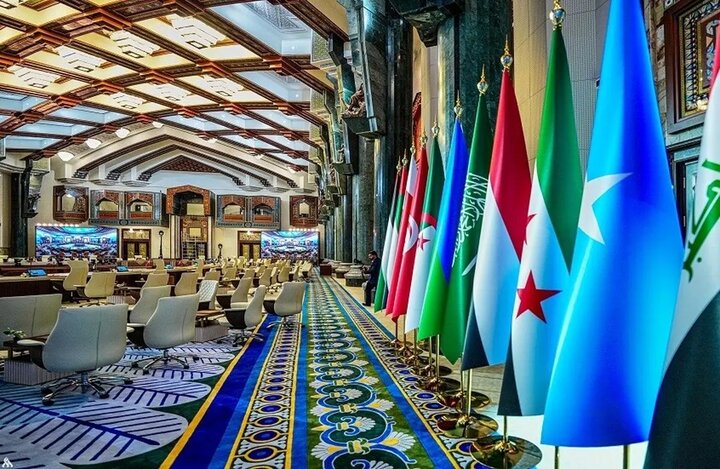
Doha consensus: Strategic shift
The outcomes of the emergency summit marked a decisive shift from previous, more fractured regional responses.
Participant nations issued strong, unified condemnations, with many labeling Israel's actions a threat to international security.
The resolutions advanced beyond rhetorical criticism to demand concrete action. These calls included comprehensive international sanctions and a severance of economic and diplomatic ties.
This dynamic forced certain governments with existing ties to Israel to publicly align with a stance of solidarity, reflecting broader public opinion across the Muslim world.

Normalization project grinds to halt
The most immediate and noticeable consequence of the crisis has been the effective collapse of the normalization project. The much-discussed possibility of a deal between Israel and Saudi Arabia, a central objective for Israeli and American diplomats, is now widely regarded as indefinitely off the table.
This sequence of events has reinforced the narrative long declared by Israel's opponents, asserting that normalization is a futile endeavor that only strengthens the criminal regime in Tel Aviv.
Israel's recent military attack on Qatar has proven to be a strategic mistake with significant consequences. It has brought the Palestinian issue back to the forefront of regional diplomacy and shattered the illusions of diplomatic integration under the current framework.
The strong consensus reached at the Doha summit conveys a clear message: the future of the region will be shaped by its main actors and owners.
Reported by Tohid Mahmoudpour








Your Comment